


Homemade Chicken Stock Recipe
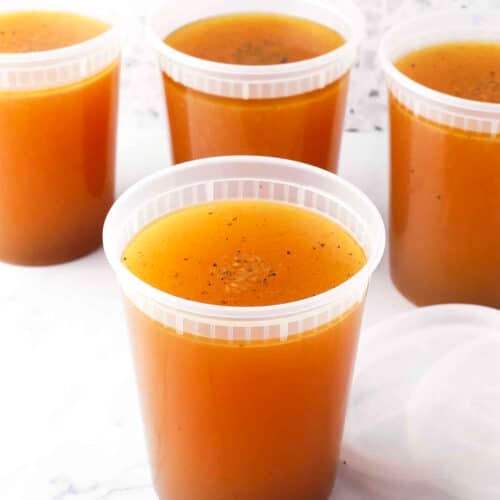
Making homemade chicken stock from scratch is easy and cost-effective. Freeze in quart sized containers for use all year long.

This post may contain affiliate links.
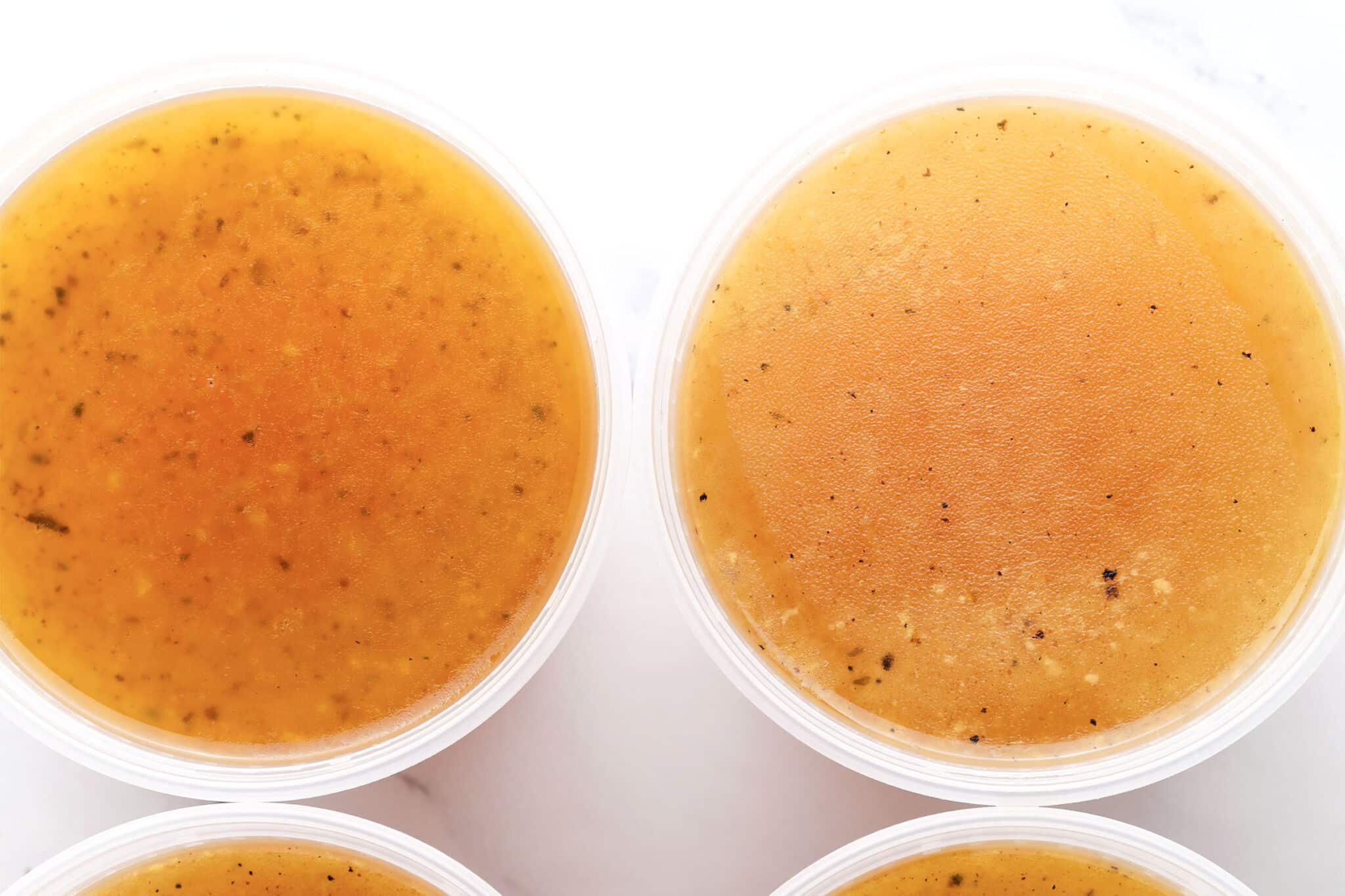
Homemade chicken stock is one of those recipes that makes everything around it better. A pot of risotto, a braise, a simple pan sauce – they all taste noticeably different when you start with stock you made yourself instead of something from a carton.
The method here is straightforward: roast your bones and vegetables first for color and depth, then simmer low and slow until the liquid turns rich and golden. I like to keep a few quart containers in the freezer at all times so it’s there whenever a recipe calls for it. Once you’ve made it this way, the store-bought version genuinely tastes flat by comparison.
If you’re new to making stock from scratch, you’ll also want to try Roasted Butternut Squash Soup and Cajun Shrimp Stew – both are perfect ways to put a fresh batch to work.
In This Post
Why this Works
Roasting the bones and vegetables before they go into the pot is the single biggest difference between a stock that tastes like warm water and one that tastes like something. The dry heat caramelizes the surface of everything, pulling out sugars and proteins that dissolve into the liquid as it simmers. The result is color, body, and a depth of flavor you simply cannot get by going straight to the pot.
The long simmer time – at least three to four hours – is what extracts collagen from the bones and cartilage. As it cools, a well-made stock will gel slightly in the refrigerator. That gel is not a flaw; it’s exactly what you want. It means the stock has enough body to enrich sauces and braises rather than just thinning them.
Keeping the heat low enough that the liquid barely trembles, never boils, is what keeps the stock clear. A hard boil forces fat and proteins into the liquid rather than letting them rise to the surface where you can skim them off.
Heather’s Recipe Notes
Drawing from 20 years of recipe development and my time co-founding a spice company, here’s what makes this recipe worth making exactly as written.
- Roast the bones and vegetables first. Even 30 to 40 minutes at 400°F makes a significant difference in flavor. Don’t skip this step.
- Start with cold water. Cold water draws impurities slowly to the surface so you can skim them cleanly. Starting with hot water speeds things up but makes for a cloudier, less clean-tasting stock.
- Skim early, not late. The foam that rises in the first 20 to 30 minutes is the window. After that it gets harder to remove cleanly. Use a wide, flat spoon and skim every 10 minutes until the surface stays clear.
- Don’t salt the stock. Season the dish you’re making with it instead. This gives you full control over sodium at the end of cooking, especially important when reducing sauces.
- Cool it fast before refrigerating. Set the pot in an ice bath or divide into smaller containers to cool quickly before putting it in the fridge. Stock that sits warm too long is a food safety risk.
- The gel test. After refrigerating overnight, run a spoon through the surface. If it’s thick and jiggly, you made a great stock. If it’s still liquid, simmer it a bit longer next time or add more bones.
Ingredients for Homemade Chicken Stock
- Chicken bones – Backs, necks, wings, carcasses from a roast chicken, or a whole raw chicken. The more joints and cartilage, the more gelatin and body in the final stock. Rotisserie chicken carcasses work well and are a great use of something you’d otherwise throw away.
- Onion – One of the three classic mirepoix vegetables. No need to peel it; the papery skin adds color.
- Carrots – Adds sweetness and a warm golden color. Rough chop, no peeling required.
- Celery – Adds a savory, slightly bitter note that balances the sweetness of the carrots. Include the leafy tops if you have them.
- Garlic – Halved bulbs, unpeeled, add depth without overpowering. Roasting them first mellows the sharpness significantly.
- Fresh thyme – A few sprigs add an earthy, floral note that’s classic in French-style stock.
- Bay leaves – Slow-release aromatics that add complexity over a long simmer. Two is enough.
- Parsley stems – The stems have more flavor than the leaves and are perfect here. Save the leaves for garnishing other dishes.
- Black peppercorns – Adds a gentle background warmth. Leave them whole.
- Water – Filtered if you can. The water makes up the majority of the final product, so quality matters.
- Optional – Chile de Arbol – One dried chile adds a quiet, smoky heat that doesn’t read as spicy but gives the stock a little more dimension.
- Optional – Apple cider vinegar – A tablespoon or two helps draw minerals and collagen from the bones. You won’t taste it in the finished stock.


Special Equipment Needed
- Large stockpot: At least 8 quarts. You need room for bones, vegetables, and a generous amount of water. Here’s a large stock pot I’d recommend.
- Fine mesh strainer: For a clean, clear stock use a fine mesh strainer or fine mesh sieve. A large colander with cheesecloth works if you don’t have one.
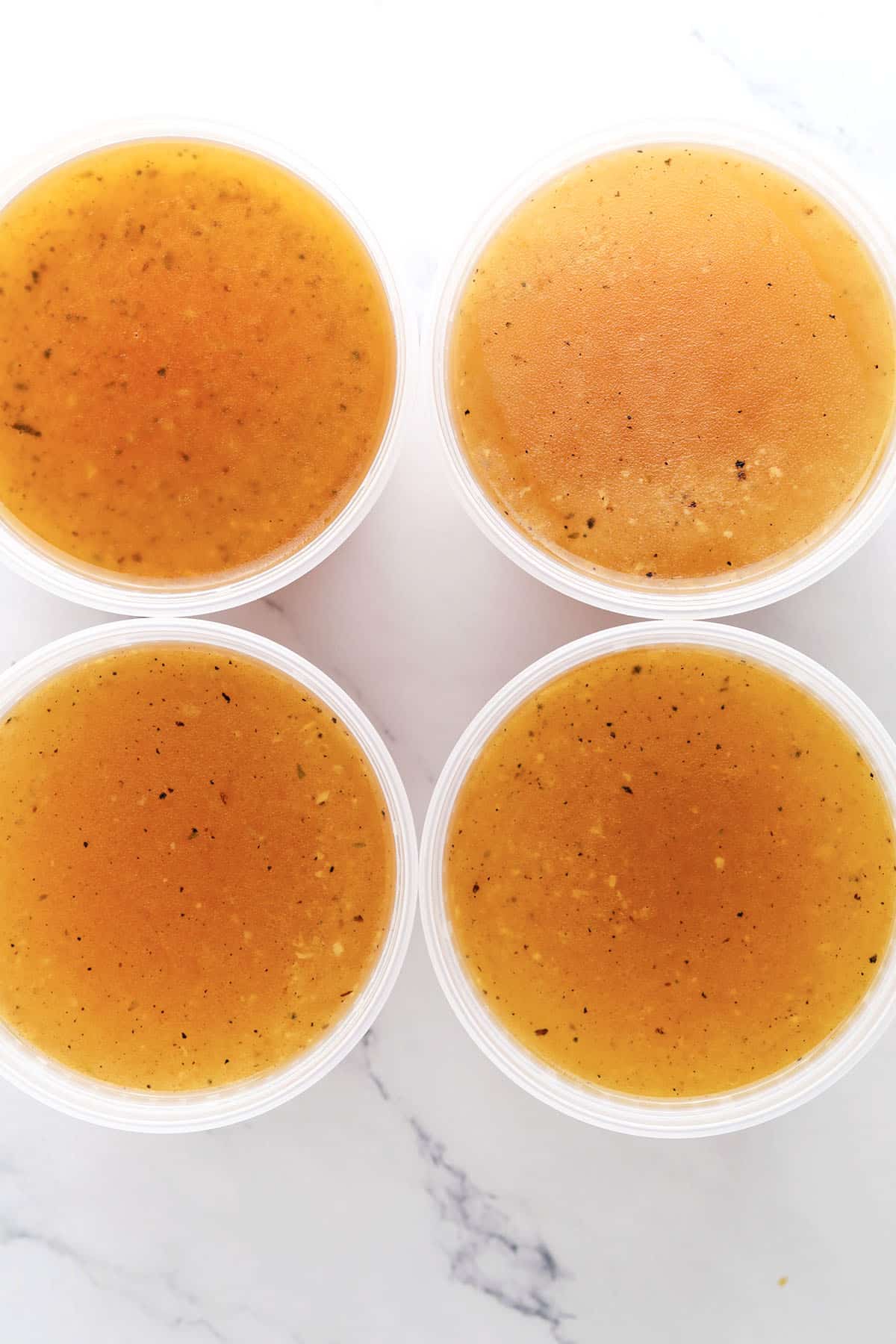
- Quart deli containers or mason jars: use quart-size deli containers or quart mason jars to store or freeze. Deli containers are better for stacking.
Step-by-Step Instructions
Now that you’ve gathered your ingredients, let’s get cooking. Here’s how to make a kitchen basics chicken stock:
Step 1: Prep Your Ingredients
Start by roughly chopping your vegetables. There’s no need for precision here, big chunks are perfect. If you’re using a whole chicken, you can cut it into pieces to fit better in your pot. If you’re using leftover bones, give them a quick rinse to remove any excess fat or debris.
Step 2: Combine Everything in a Pot
Place the chicken bones (or whole chicken) in a large stockpot or Dutch oven. Add the chopped vegetables, garlic, herbs, and any optional ingredients. Cover everything with cold water, making sure there’s enough to fully submerge the ingredients. Leave about an inch of space at the top of the pot to prevent boiling over.
Step 3: Bring to a Simmer
Place the pot on the stove over medium-high heat. Bring the water to a gentle simmer, you’ll see small bubbles forming around the edges of the pot. Avoid letting it come to a rolling boil, as this can make the stock cloudy and bitter.
Step 4: Skim the Scum
As the stock simmers, you’ll notice a foamy layer forming on the surface. This is called “scum,” and it’s mostly proteins and impurities rising to the top. Use a slotted spoon or large metal spoon to remove this foam. Skimming ensures a clearer, cleaner-tasting stock.
Step 5: Simmer Low and Slow
Once you’ve skimmed the scum, reduce to low heat. Let the stock simmer gently, uncovered, for at least 3-4 hours. If you’re using a whole chicken, you can remove the cooked chicken meat after about an hour and return the bones to the pot to continue simmering. The longer you simmer, the richer and more flavorful your stock will be. Just be sure to keep an eye on the water level and add more if needed.
Step 6: Strain and Cool
When the stock is done simmering, remove it from the heat. Carefully strain the stock through a fine-mesh strainer or cheesecloth into a large bowl or another pot. Discard the solids (or compost them). Let the stock cool to room temperature before transferring it to containers.
Step 7: Store or Use
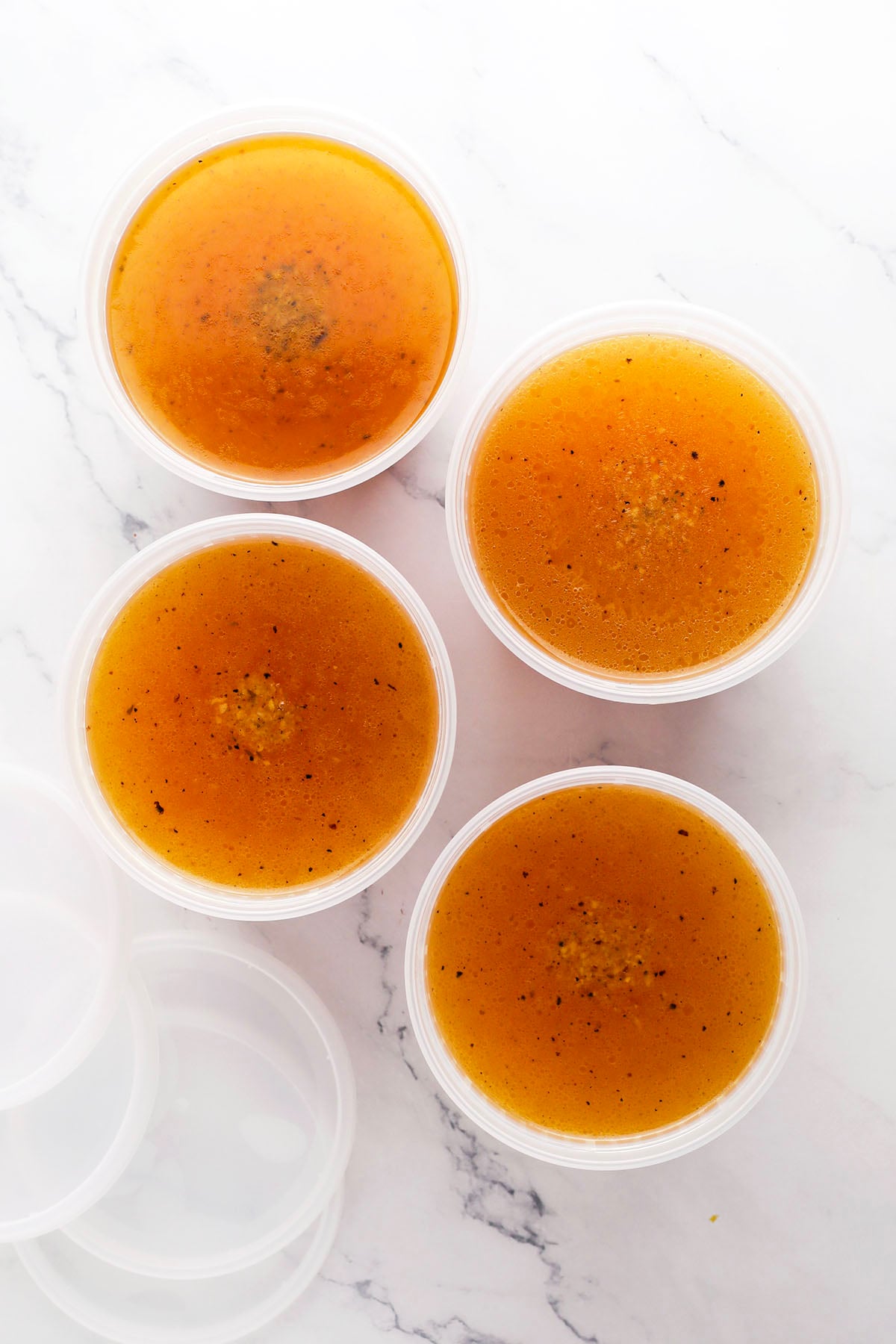
Once cooled, you can use the stock immediately or store it for later. It will keep in the fridge for up to 5 days or in the freezer for several months. I like to freeze mine in deli containers or mason jars for easy portioning.
What to Serve with Chicken Stock
Homemade chicken stock is a foundation ingredient, not a finished dish. Here’s a list of recipes and concepts of where to use it:
- Roasted Butternut Squash Soup – Stock is the backbone of any puréed soup. The richer your stock, the better the soup.
- Cajun Shrimp Stew – A deeply flavored stock makes a significant difference in any stew base.
- Loaded Baked Potato Soup – Sub stock for water when cooking the potatoes for an extra layer of flavor.
- Tater Tot Casserole – Works as the liquid base in any casserole that calls for broth.
- Easy Enchilada Sauce – A splash of stock loosens the sauce and adds body.
- Risotto – Replace water entirely with warm stock, added one ladle at a time.
- Pan sauces – Deglaze any skillet with stock after searing meat for an instant sauce.
- Grains – Cook rice, farro, or quinoa in stock instead of water for a simple upgrade.
Frequently Asked Questions
Stock is made primarily from bones, which release collagen and gelatin during a long simmer. Broth is made from meat, which produces a thinner, more lightly flavored liquid. Stock has more body and is better for sauces and braises; broth is lighter and works well for soups you want to keep clear. In practice, the terms are often used interchangeably in recipes, and either will work in most applications.
Up to 5 days in an airtight container. You’ll know it’s still good if it gels when cold and smells clean and savory when you warm it. If it smells sour or fermented, discard it.
Yes, and it freezes exceptionally well for up to 3 months. Quart deli containers or freezer-safe mason jars both work well. Leave an inch of headspace at the top of jars since liquid expands as it freezes. Freeze in portions that match how you typically use stock – quarts for soups, cups for sauces.
Cloudy stock is almost always caused by one of three things: letting it come to a rolling boil instead of a gentle simmer, not skimming the foam in the early stages, or stirring the pot while it simmers. None of these make the stock unsafe or bad-tasting – cloudiness is an aesthetic issue, not a flavor one. For a clearer stock, keep the heat low and skim frequently during the first 30 minutes.
Yes to both. In a slow cooker, combine all ingredients and cook on low for 10 to 12 hours. In an Instant Pot, cook on high pressure for 2 hours with a natural release. The Instant Pot method produces good flavor but will not result in a stock that gels as firmly as one simmered on the stovetop for 4 or more hours.
Almost always, yes. Because stock has more body than broth, it will make sauces slightly richer and soups slightly thicker. In most recipes this is an improvement. If a recipe specifically calls for a light, clear broth – like a simple consommé – stock may be too heavy.
No. Leave the stock unsalted so you can control the seasoning in whatever dish you use it for. This is especially important when reducing stock for sauces, where the salt concentration increases as the liquid cooks down. Season the final dish, not the stock.
More Recipes to Try
- Thanksgiving Turkey Pot Pie
- Easy Enchilada Sauce
- Sausage & Caramelized Onion Stuffing
- Roasted Butternut Squash Soup
- Cajun Shrimp Stew
- Oven-to-Grill Baby Back Ribs
- Vin Rouge Pot Roast
Basic Chicken Stock Recipe

Recommended Tools
Ingredients
- 2 chicken carcasses, or whole raw chickens
- 4 large carrots, halved
- 2 large yellow onions, halved
- 4 celery stalks, halved
- 1 tbsp black peppercorns
- 1 head garlic, halved
- 8 quarts water
- kosher salt, to taste
- 1 bunch parsley, or other herbs like thyme, optional

Instructions
- Add all ingredients to a large stock pot and bring to a boil.
- Skim any scum off the top, then reduce heat to low and simmer for 3-4 hours.
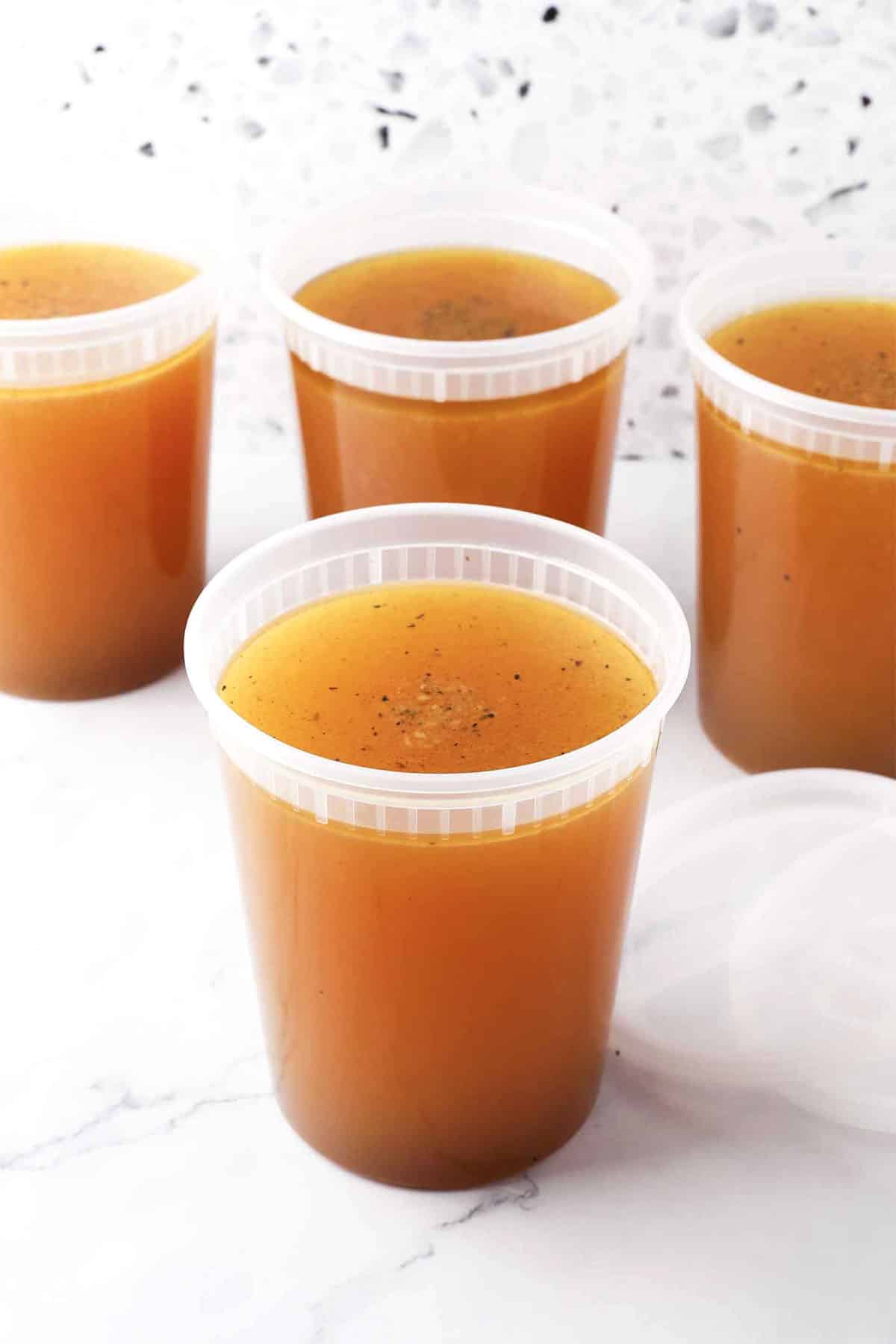
- Strain the solids. Season with salt, if desired and ladle the chicken stock into large deli containers or mason jars and cool on the counter before freezing.
Save this Recipe!
Easily save this recipe to your own recipe collection box and come back to it anytime you want!
Notes
Nutrition
*Nutritional information is not guaranteed to be accurate.
Did you try this recipe?
Please Leave a Review & Star Rating!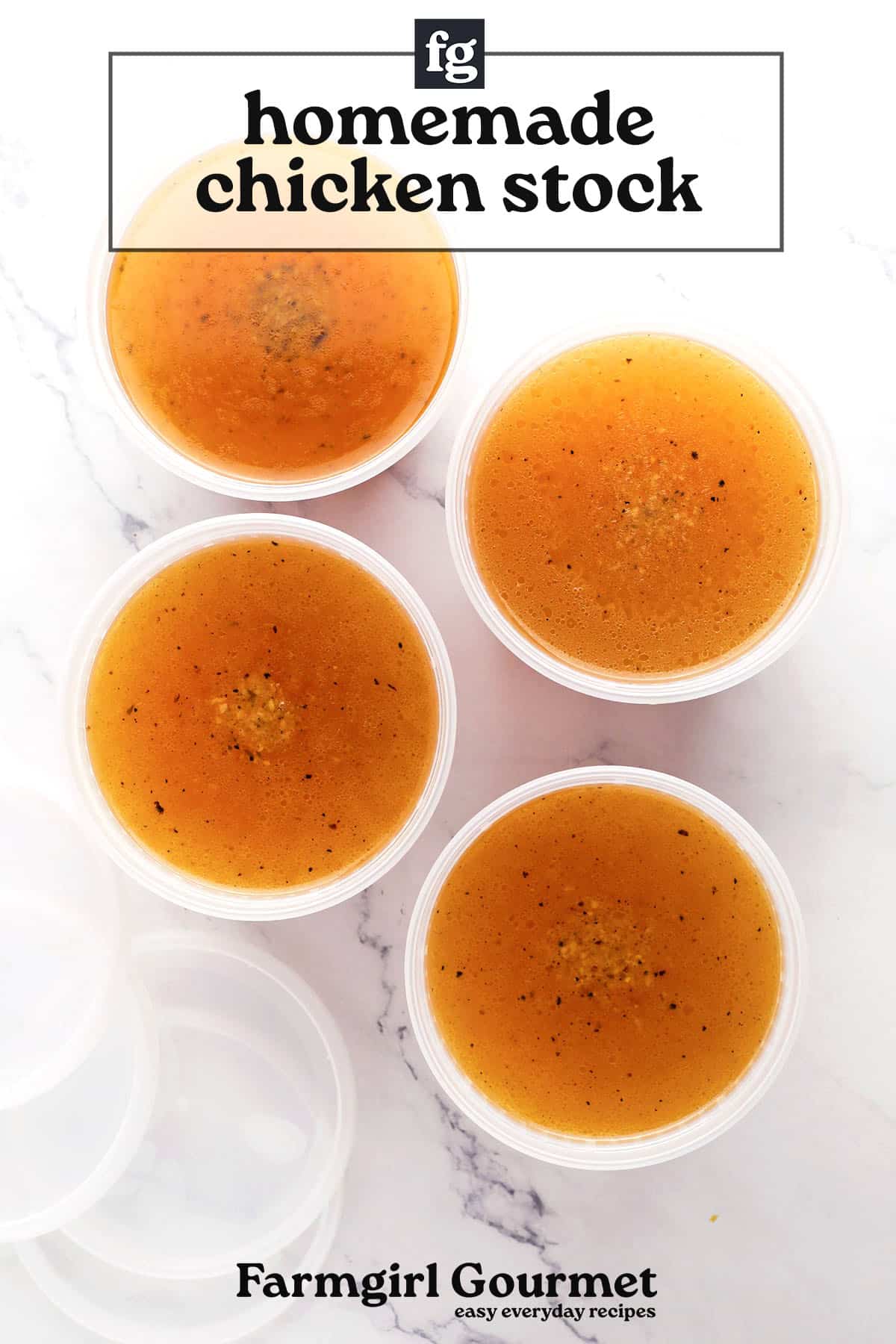
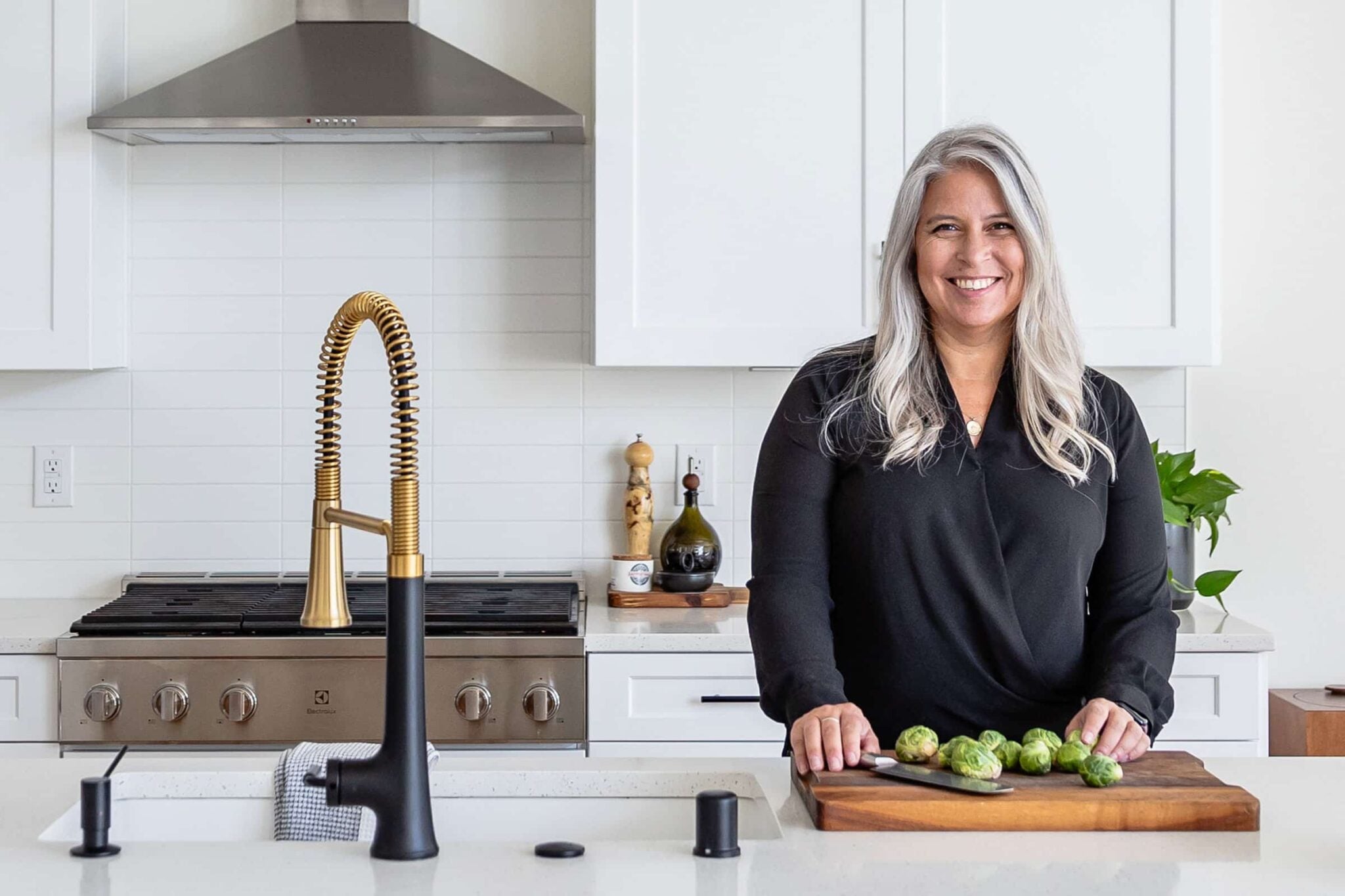
Hi! I’m Heather
I’m Heather, a recipe developer and content creator based in Vancouver, Washington. I started Farmgirl Gourmet in 2006 because I believed weeknight dinners shouldn’t be boring and gourmet shouldn’t mean complicated. I’m also the co-founder of Spiceology, so safe to say I think about food for a living. Stick around for recipes that actually make it into your regular rotation.
Great basic recipe. I used a package of bone-in split chicken breasts with skin, and added some fresh ground black pepper and some poultry seasoning. Once the breasts were cooked through, I took them out and de-boned them, then put the bones and skin back in the pot and continued to simmer for another two hours. It came out perfect!
I love your modifications Maggie! Thanks for sharing them. ~heather
So simple yet so incredibly flavorful and delicious! Make a double batch and freeze it to use all the time.