


Easy Homemade Ricotta Cheese
Homemade ricotta cheese with just 5 ingredients. Learn Heather’s tips for creamy curds, the right milk to buy, and how long to drain for perfect texture.

This post may contain affiliate links.
Homemade ricotta cheese is a soft, fresh cheese made by gently heating whole milk and cream, then adding lemon juice to separate the curds from the whey. It tastes sweeter, creamier, and far fresher than anything you will find in a plastic tub at the store, and it starts with just five simple ingredients. The whole process takes about an hour, and most of that is hands-off draining time. I started making my own ricotta when I realized how little effort it actually takes, and after that first warm spoonful straight out of the cheesecloth, store-bought never stood a chance in my kitchen again.
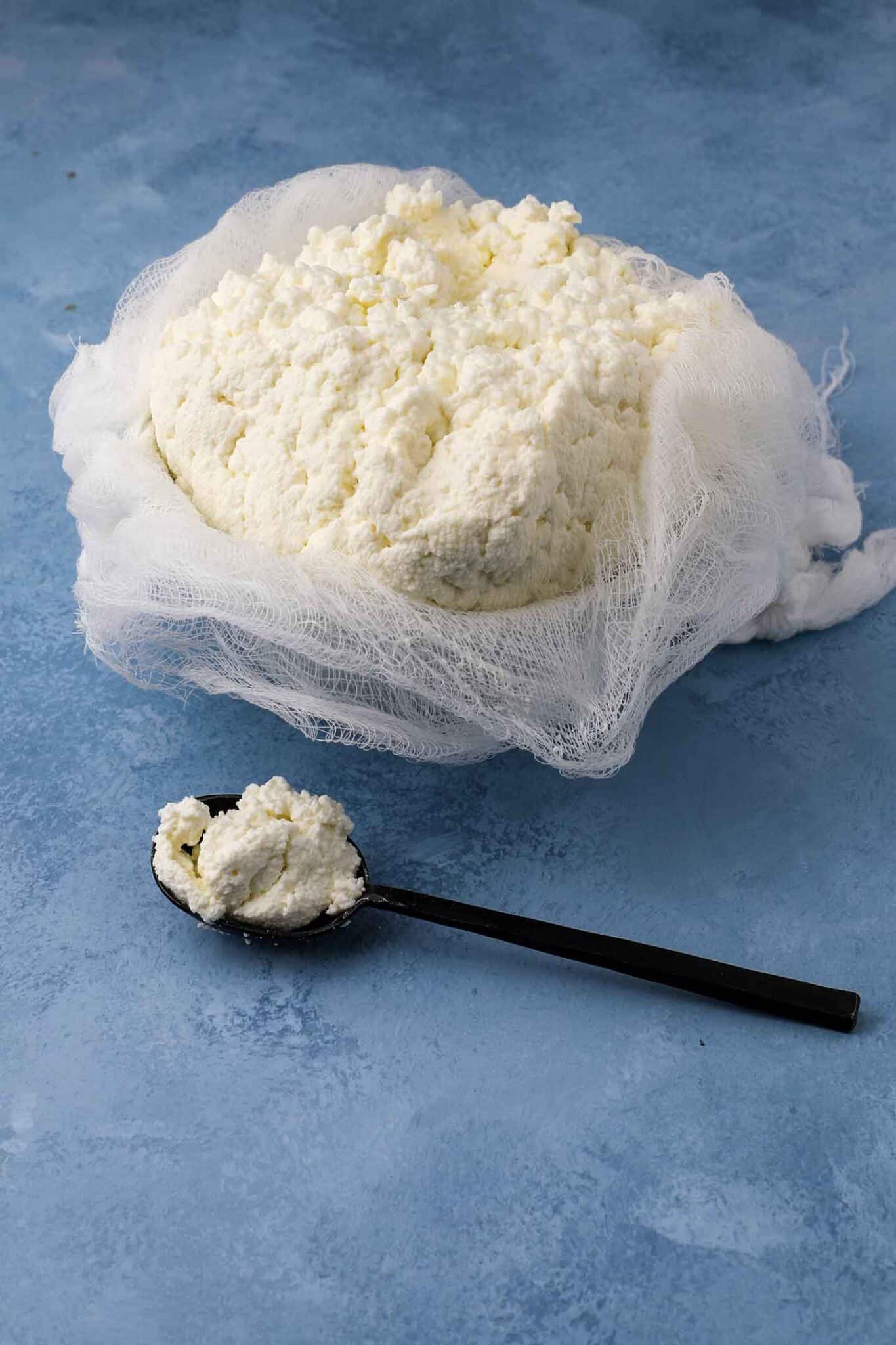
Once you have a batch in the fridge, the possibilities open up fast. Layer it into Winter Squash, Sage & Fresh Ricotta Manicotti for a fall dinner party, work it into the dough for Beetroot Ricotta Gnocchi, or spread it between the noodles in my Easy Cheesy Skillet Lasagna for a weeknight win. A spoonful on top of my Easy Lasagne Muffins makes them even more crowd friendly.
In This Post
Why You’ll Love this Homemade Ricotta
Fresh ricotta has a delicate, milky sweetness and a texture somewhere between whipped cream and soft curds. The splash of heavy cream makes it extra rich, while the lemon juice adds the faintest bright note that keeps it from tasting flat. Eaten warm with a drizzle of olive oil and a pinch of flaky salt, it is one of those simple pleasures that makes you feel like a real cheesemaker.
It is also practical. You need no special cultures, no rennet, and no fancy equipment, just a big pot, a colander, and some cheesecloth. Making ricotta from scratch lets you control the salt and the final texture, so you can drain it loose and creamy for toast or firm and thick for stuffed pasta. One batch covers a full lasagna with plenty left over for breakfast.
Heather’s Expert Tips for the Best Easy Homemade Ricotta Cheese
Drawing from 20 years of recipe development and my time co-founding a spice company, here’s what makes this recipe worth making exactly as written.
- Use a heavy-bottomed pot and low heat: Milk scorches quickly, and a burnt layer on the bottom will flavor the whole batch. Keep the heat at medium-low, be patient, and run a spoon along the bottom of the pot every few minutes.
- Start with good salt: As the co-founder of Spiceology, I spent years obsessing over how ingredient quality changes a finished dish, and salt is where it shows most. An untreated sea salt like sel gris dissolves cleanly into the brine and seasons the curds evenly without the harsh edge of iodized table salt.
- Skip ultra-pasteurized milk: Ultra-pasteurized (UHT) milk is heated so high that its proteins struggle to form curds. Look for regular pasteurized whole milk for the best yield and texture.
- Leave the curds alone: After you stir in the lemon juice, let the pot sit undisturbed for the full 10 minutes. Stirring too much breaks the curds into tiny grains that slip through the cheesecloth.
- Control the texture with draining time: About 20 minutes gives you a soft, spoonable ricotta for toast and dips. Hang it for 30 minutes or longer when you want a thicker cheese for manicotti, lasagna, or gnocchi.
Equipment Needed
- Large heavy-bottomed stock pot (8 quart or larger)
- Cheesecloth
- Large colander
- Slotted spoon or spider skimmer
- Wooden spoon
- Airtight glass storage containers
Ingredients to make Homemade Ricotta Cheese
- Sea salt untreated like Sel Gris or Grey Salt
- Water: used to dissolve the salt before adding to the milk mixture
- Whole milk: for best results, use whole milk
- Heavy cream: adds extra creamines to the ricotta
- Lemon juice: to create the curds and whey
Find the full printable recipe with exact measurements and instructions above.
How to Make Homemade Ricotta Cheese
- Dissolve Salt: Mix the sea salt and water, until mostly dissolved.
- Heat Dairy: In a large stock pot, add the milk, heavy cream and sea salt water.
- Slow Boil: Heat over medium heat until the milk begins to boil softly. this can take some time, make sure to keep an eye on it or it can scorch.
- Curdle: Add the lemon juice and stir with a wooden spoon to combine. watch for the curds to come to the surface.
- Let Rest: Once a thin layer of curds has formed, remove from the heat and let sit undisturbed for 10 minutes. This helps the curds fully separate from the whey.
- Strain: Place a double layer of cheesecloth (you can buy this at the local fabric store) in a colander or fine mesh strainer set in the sink. Use a slotted spoon, skim the curds off the top and place in the lined strainer. What will remain will be a yellowish colored water.
- Hang and Drain: Gather the cheese cloth corners and tie them around a long utensil set over the sink and let drain for 20-30 minutes or until the desired consistency the longer you hang it, the dryer the cheese.
- Store or Serve: Store in an airtight container and refrigerate. Use within 3 days for best taste and texture.


Recipe Variations & Substitutions
- White wine vinegar: Use it in place of the lemon juice for a cleaner, more neutral flavor that lets the milk shine.
- Lighter whole milk ricotta: Leave out the heavy cream for a leaner cheese. The yield will be a little smaller and the texture slightly less rich.
- Fresh herb ricotta: Fold in chopped chives, basil, or parsley along with lemon zest and cracked black pepper after draining for an instant spread.
- Sweet breakfast ricotta: Stir in honey, a splash of vanilla, and orange zest, then serve it over toast, pancakes, or fresh fruit.
- Goat milk ricotta: Swap in goat milk for a tangier cheese with a softer, finer curd.
How to Stove, Freeze, and Reheat
- Refrigerate: Transfer the drained ricotta to an airtight container and keep it in the fridge for up to 3 days. The flavor is brightest within the first day or two.
- Pour off extra liquid: A little whey may collect on top as the cheese sits. Pour it off or stir it back in for a creamier texture.
- Freeze: Ricotta freezes for up to 3 months, though the texture turns a bit grainy. Frozen ricotta works best in baked dishes like lasagna, manicotti, and stuffed shells.
- Thaw: Move frozen ricotta to the fridge overnight, then stir well to bring it back together before using.
- Reheat: Plain ricotta does not need reheating. When it is baked into a dish, cover the pan with foil so the cheese stays moist and creamy.
What to Serve with Homemade Ricotta Cheese
- Toss hot pasta with 5-Minute Pistachio Pesto and finish with spoonfuls of fresh ricotta.
- Pair ricotta with Easy Rosemary Fig Jam on crostini for an easy appetizer.
- Spread it on warm toast and top with a swirl of Meyer Lemon Curd.
- Dollop it over pizza made with my Easy 20 Minute Pizza Dough before baking.
- Spoon a generous scoop over a bowl of Pasta alla Vodka.
Frequently Asked Questions
Not exactly. Traditional Italian ricotta is made by reheating the whey left over from making other cheeses, while this version uses whole milk and cream. The result is richer and creamier, and it works in any recipe that calls for ricotta.
Yes. Apple cider vinegar works in the same amount as lemon juice. Lemon gives a slightly brighter flavor, while vinegar is a bit more neutral, and both produce tender curds.
The most common cause is ultra-pasteurized milk, which does not curdle well. The milk also may not have been hot enough. Return the pot to low heat until it is steaming with gentle bubbles at the edges, then add another tablespoon of lemon juice and let it rest.
Use the whey in place of water when baking bread, cooking rice or oats, or making soup. It adds a subtle tang and extra protein. My Ultimate Guide to Homemade Bread is a great place to start, and if you keep backyard chickens, they love it too.
Yes. Make it up to 2 days before you plan to use it and store it in an airtight container in the fridge. For lasagna or stuffed pasta, drain it a little longer so it holds its shape.
More Recipes We Love
- Beetroot Ricotta Gnocchi
- Butternut Squash Manicotti
- Easy Cheesy Skillet Lasagna
- Meyer Lemon Curd
- Roasted Pumpkin & Wild Rice Salad
- Homemade Flour Tortillas
- Mexican Lasagna
Homemade Ricotta Cheese Recipe


Recommended Tools
- Slotted Spoon
Ingredients
- 1 tbsp sea salt, untreated like Sel Gris or Grey Salt
- 2 cup water
- 1 gallon whole milk
- 16 oz heavy cream
- ⅓ cup lemon juice, from 2 lemons or 1/3 cup apple cider vinegar

Instructions
- Mix the sea salt and water, until mostly dissolved.
- In a large stock pot, add the milk, heavy cream and sea salt water.
- Heat over medium-low heat until the milk begins to boil softly. this can take some time, make sure to keep an eye on it or it can scorch.
- Add the lemon juice and stir with a wooden spoon to combine. watch for the curds to come to the surface. once you have a thin layer of curds, remove from the heat and let sit undisturbed for 10 minutes.
- Place a double thickness of cheese cloth (you can buy this at the local fabric store) in a colander set in the sink. with a slotted spoon, skim the curds off the top and place in the colander. what will remain will be a yellowish colored water. you can feed this to your chickens and cats like it as well, or you can toss it out.
- Gather the cheese cloth corners and tie them around a long utensil set over the sink and let drain for 20-30 minutes or until the desired consistency the longer you hang it, the dryer the cheese. Store in the fridge up to 3 days.
Did you make this recipe?
Please leave a star rating and review . I appreciate your feedback, and it helps others too!Final Thoughts
There’s a little magic in watching milk and cream transform into fluffy, rich ricotta cheese with just a splash of lemon juice and some heat. Making ricotta at home not only gives you control over the ingredients, but it also opens up a world of possibilities in the kitchen. From creamy pastas and dreamy desserts to rustic tarts and elegant appetizers, this simple cheese adds richness and depth to any dish.
Once you’ve tried homemade ricotta, you might never go back to the store-bought version again. If you make this ricotta recipe, tag @farmgirlgourmet on Instagram – I love seeing your creations!

Hi! I’m Heather
I’m Heather, a recipe developer and content creator based in Vancouver, Washington. I started Farmgirl Gourmet in 2006 because I believed weeknight dinners shouldn’t be boring and gourmet shouldn’t mean complicated. I’m also the co-founder of Spiceology, so safe to say I think about food for a living. Stick around for recipes that actually make it into your regular rotation.
So simple
Just curious, as I’ve never made cheese before, but what do you do with the cheese cloth after? Do you wash it with the towels in the laundry, just rinse it off, or throw it away? Thank you for a great website that can take a novice like me and show me how to make delicious foods. And I love the dog!
Hi Rick, I usually wash it out really well in the sink with mild kitchen soap (low or no perfume). If you wash it in the washing machine, it will take on the smell of your detergent (know this from experience). Not so great when you make that second batch of cheese. Also, a great place to buy it is at the fabric store. You can get it in bulk for far less than the grocery stores minuscule square – which makes chucking it after each batch less painful. Thanks for commenting! Let me know how you like it!! It’s my favorite recipe for ricotta and I’m drooling now just thinking about it. Enjoy! ~Heather 🙂