




If you’ve ever Googled “what equipment do I need to become a food blogger,” you’ve probably landed on a list that made your eyes water and your wallet weep. A mirrorless camera body. A full lens kit. Studio lighting. A ring light. A props budget. Adobe Creative Cloud. A tripod for every angle.
Here’s the thing: most of that advice comes from bloggers who are retrofitting their origin story through the lens of what they have now, not what they actually started with.
I started Farmgirl Gourmet in 2006. My setup? A point-and-shoot camera, a free image editor, and absolutely zero understanding of light. I used to photograph my food under the range hood light (see above). If you’ve ever tried that, you already know: it is not pretty. I didn’t even know images should all be the same size.
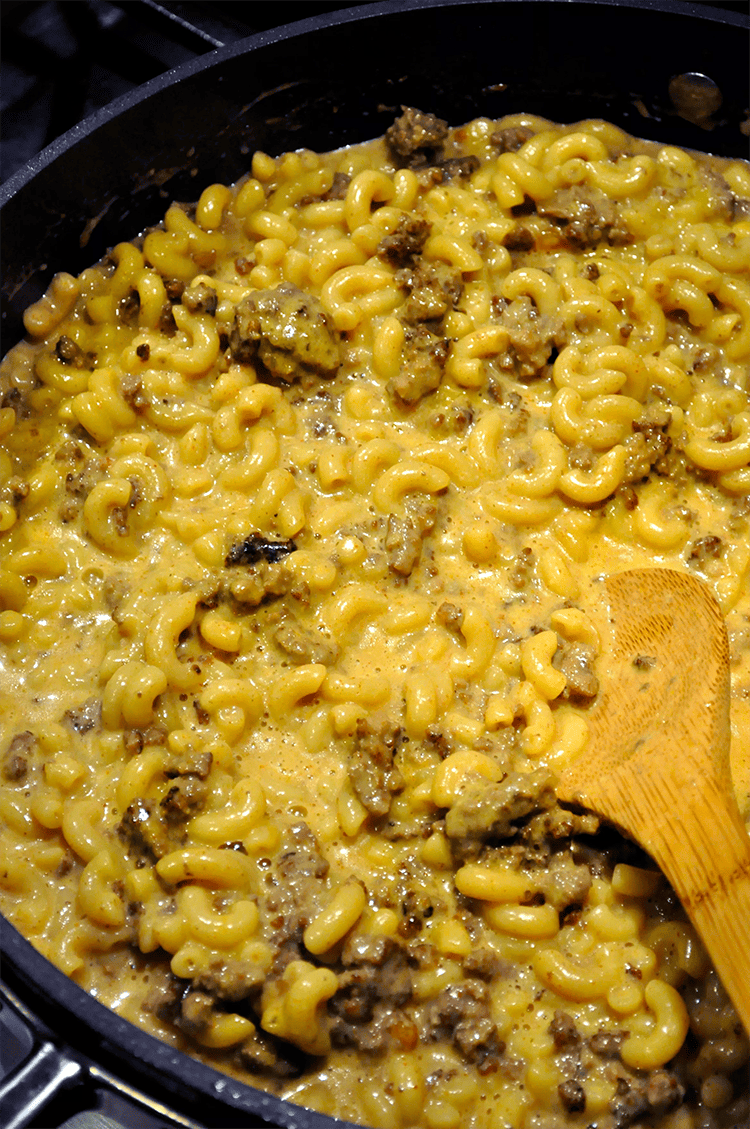
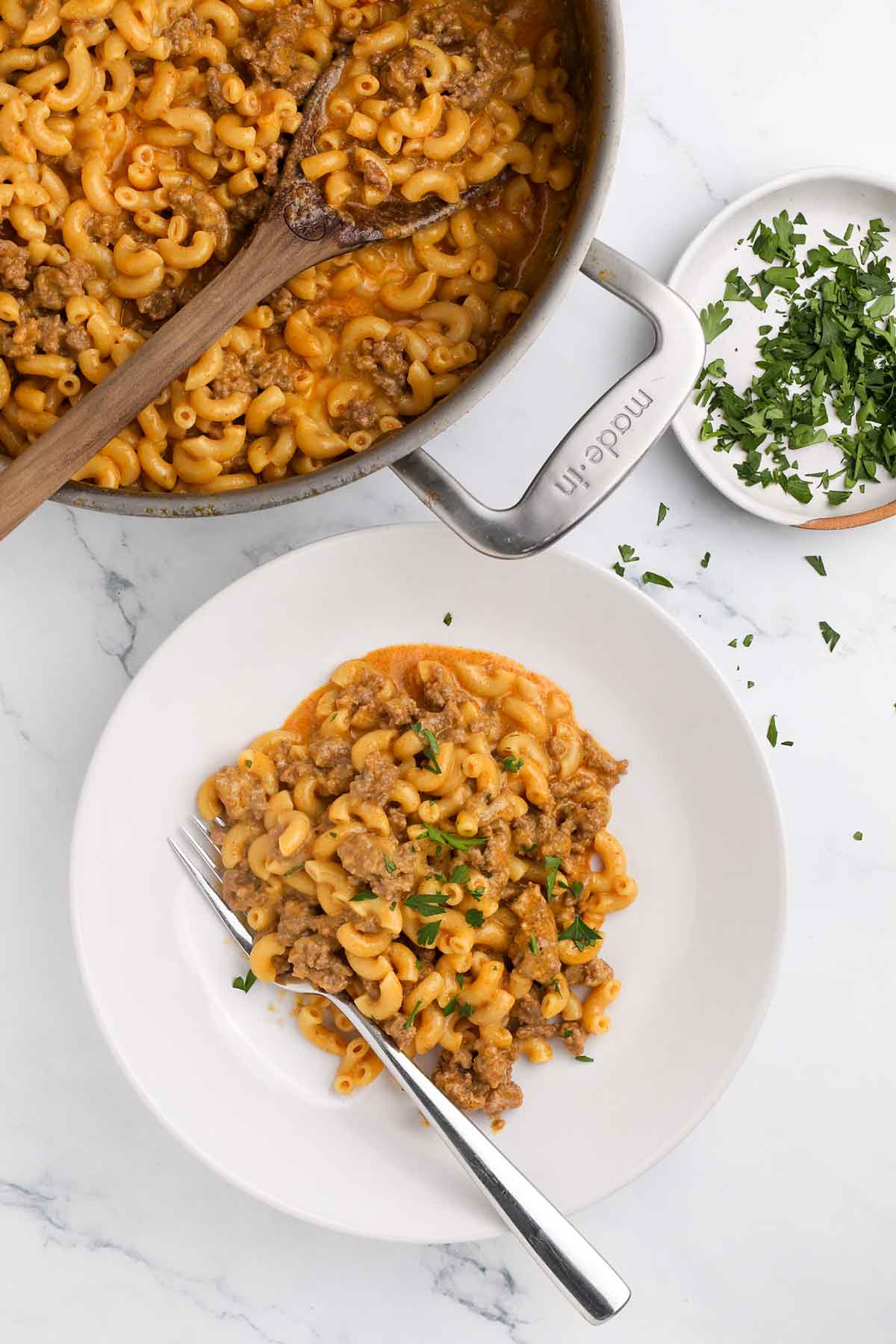
And yet, I kept going. I figured it out. Eventually I leveled up my gear to the point where I’ve shot professional food photography for Walmart, Forbes, and other major clients. I also run a brand and design business at heatherscholten.com that serves CPG and brand clients who care deeply about how their food looks.
In This Post
So let me give you the honest version of this conversation – what you actually need to start, what actually matters, and what you can save for later.
The Short Answer
You need three things to start a food blog:
- A decent camera
- Natural light (or one good artificial light source)
- A place to publish your content
Everything else is a nice-to-have. Let’s break it all down.
Your Camera: The One Investment Worth Making
If you’re going to spend money anywhere, spend it here.
You do not need the latest mirrorless camera. You do not need to spend $3,000. But you do need a camera that gives you control – over focus, exposure, and depth of field. That means a DSLR.
A used or entry-level DSLR like a Canon Rebel or Nikon D3500 will get you sharp, consistent images that your readers will actually want to look at. The difference between a point-and-shoot and a DSLR is immediately visible in your photos. The difference between a $700 DSLR and a $3,500 mirrorless body? Much less so, especially when you’re starting out.
My current setup: I shoot on a Canon 5D Mark IV with a 50mm lens for lifestyle and wider shots and a 100mm macro lens for tight detail shots. The macro lens is genuinely transformative for food – it lets you get close to a dish and capture texture in a way that makes people want to reach through the screen. But I didn’t start here, and you don’t need to either.
The bottom line: If you have a $500 budget, put it toward a camera. That’s your entire budget, and that’s the right call.
Lenses: Start With One, Make It the 50mm
Most DSLRs come with an 18-55mm kit lens, and honestly? It’s fine to start. But if you’re going to buy one lens, the 50mm f/1.8 (often called the “nifty fifty”) is the food blogger’s best friend. It’s affordable, it creates beautiful background blur, and it handles low light better than the kit lens.
When you’re ready to invest more, a macro lens opens up a whole new world of close-up shots – melting butter, spice textures, the crunch on a perfectly seared crust. That’s where the magic is.
Lighting: The Thing That Will Change Everything
Here is what I wish someone had told me in 2006: lighting is more important than your camera.
The range hood era of my food photography career is something I can laugh about now, but the truth is that bad lighting makes good food look bad. And great lighting makes average food look stunning.
Start with natural light. A large window, ideally north or south facing for consistent light, is your best friend. Shoot during the day. Move your dishes close to the window. Use a piece of white foam board on the opposite side of your dish to bounce light back and reduce shadows. That’s your entire lighting setup, and it costs next to nothing.
When you’re ready to go artificial: I use a Godox SL150III with a large softbox. The goal is clean, directional light that mimics window light – not harsh, not flat, just beautiful. A good artificial light setup like this lets you shoot at 10pm on a rainy Tuesday and have the same quality as a perfect golden-hour afternoon by the window. For a food blogger trying to maintain a consistent publishing schedule, that matters enormously.
Reflectors are worth adding early. A simple 5-in-1 collapsible reflector costs under $20 and lets you control shadows and fill light in ways that would otherwise require a second light source.
Backgrounds and Surfaces: The Props Trap
Let’s talk about something that wastes a lot of new bloggers’ money: props.
Scroll through food blogs or Instagram and you’ll see elaborate tablescapes – vintage silverware, ceramic ramekins, fresh herbs artfully scattered, hand-thrown pottery on reclaimed wood. Some of those setups involve professional food stylists and prop collections worth thousands of dollars.
You do not need any of that.
Look at the New York Times Food section. The majority of their dishes are shot on a simple white round plate with basic silverware. The kind of plate you could pick up at a dollar store. Their photography is stunning not because of the props – it’s stunning because of the light, the composition, and the food itself.
What actually helps: A few vinyl backdrops in neutral tones (white, grey, dark wood, light concrete) give you variety without taking up much storage space and clean up easily. A couple of solid-colored linens and a neutral cutting board round out a versatile setup. My favorite backdrops are from Captured by Lucy which is located in the UK but ships worldwide. They are affordable and beautiful.
Keep it simple. The food is the hero. Let it be.
Tripods: You Need More Than One (Eventually)
A tripod sounds like a basic piece of gear, but it’s one of those things that expands as your photography evolves.
For eye-level and 45-degree angle shots, a standard tripod works great. But overhead shots – the flat lay, the “birds eye view” of a full spread – require either a tripod with a horizontal arm or a dedicated overhead rig. Once you start shooting overhead, you’ll wonder how you ever lived without it.
Start with one basic tripod. Add an overhead setup when the budget allows and when you start doing flat lays regularly.
Editing Software: Free Is Completely Fine to Start
Here is where I’ll save you a lot of money.
Canva is free. It has solid editing capabilities that are more than sufficient for a beginning food blogger. You do not need Adobe Lightroom or Photoshop when you’re just starting out. They are powerful tools, but they also have a learning curve and a monthly cost that doesn’t make sense until you’re serious about leveling up.
When you do reach that point, Lightroom Classic is the gold standard for food bloggers. I use it to tether my camera while I shoot (meaning my photos show up on my desktop in real time as I take them – it’s a game changer for composition) and for batch editing in post. I also do a second pass in Photoshop using proprietary filters I’ve developed over the years so that all of my photos have a consistent look and feel. That consistency is something your readers notice even if they can’t articulate why – it’s part of your brand.
But again: start free. Learn the fundamentals. Upgrade when you outgrow what you have.
The Tech Stack: What Keeps the Blog Actually Running
Photography is only half of the equation. Here’s what you need on the tech side:
Computer: A desktop is my preference over a laptop for editing and blogging. The larger screen makes a real difference when you’re editing photos or writing long-form posts. That said, a laptop absolutely works – use what you have.
Website platform: WordPress with the Kadence theme. WordPress gives you full ownership and control of your content, and Kadence is fast and clean – both important for SEO and user experience. (I build sites on this stack for clients through my design business, and it remains my go-to.)
Email marketing: Kit (formerly ConvertKit) is built for content creators and makes it easy to send newsletters, set up automations, and grow your subscriber list. Building your email list is one of the most important things you can do as a food blogger – social media algorithms come and go, but your list is yours.
Storage: Your photos are large files. You will fill up your hard drive faster than you think. Google Drive or another cloud-based storage solution is non-negotiable. Back up everything.
SD cards: If you’re not shooting tethered to a computer, you’ll need SD cards. Get at least two so you’re never stuck mid-shoot with a full card.
SEO tools: A Yoast SEO plugin on your WordPress site will guide you through on-page SEO basics. For keyword research, Keysearch and AnswerThePublic are both excellent for finding long-tail keywords – the specific phrases people type into Google when they’re looking for exactly what you make. Long-tail keywords are where new bloggers can actually compete and rank.
Google Search Console: Free, from Google, and essential. It shows you what search queries are bringing people to your site, which pages are performing, and any technical issues Google is flagging. Set it up before your first post goes live.
The $500 Starter Budget
If you’re starting from scratch with $500, here’s how I’d spend it:
All $500: Camera.
A used Canon Rebel T7i or similar entry-level DSLR with a kit lens can be found in excellent condition for right around this price on eBay or Facebook Marketplace. This is your single highest-impact purchase.
For everything else:
- Edit with Canva (free)
- Use your biggest window for light (free) and diffuse with an inexpensive sheer curtain
- Use a white foam board from the dollar store as a reflector (under $5)
- Shoot on your best-looking plate (you already own it)
- Start your site on WordPress.com or a basic hosting plan (under $10/month)
- Use Google Drive for storage (free up to 15GB)
The range hood era is real, but you don’t have to live there for long. A good camera and a window will get you further than you think.
Now that you’re up and running, check out this post on how to make money with your food blog.
Gear Summary: What to Buy and When
|
Stage |
What to get |
|---|---|
|
Starting out |
DSLR camera, natural light, Canva, basic tripod |
|
Growing |
Artificial light + softbox, backdrops, 50mm lens |
|
Leveling up |
Lightroom, macro lens, overhead tripod rig, reflectors |
|
Professional |
Full lighting setup, tethering workflow, Photoshop |
Frequently Asked Questions
No, but you do need something better than a phone or a basic point-and-shoot. An entry-level DSLR gives you the control over focus and light that makes food photography work. Start there and upgrade when you outgrow it.
Modern smartphones take genuinely impressive photos, and if your phone is all you have, use it. But a DSLR gives you control over depth of field and low-light performance that phones still struggle to match, especially for blog-quality images you’ll want to reuse for years.
Your camera. Everything else – lighting, backdrops, lenses, editing software – amplifies the camera’s output. A good camera with bad lighting is fixable. Bad camera quality isn’t easily fixed in post.
You can get up and running for under $600 total if you’re strategic: $500 on a used DSLR, free editing tools, basic hosting, and natural light. The blog itself costs more in time than in money, at least in the beginning.
Not at the start. Canva is free and capable enough for beginners. Add Adobe tools when you’re ready to develop a consistent visual style and take your photography more seriously.
Less important than most people think. Great food photography is about light, composition, and the food itself – not an elaborate collection of vintage linens and artisan ceramics. A clean white plate and good light will outperform a cluttered prop-heavy shot every time.
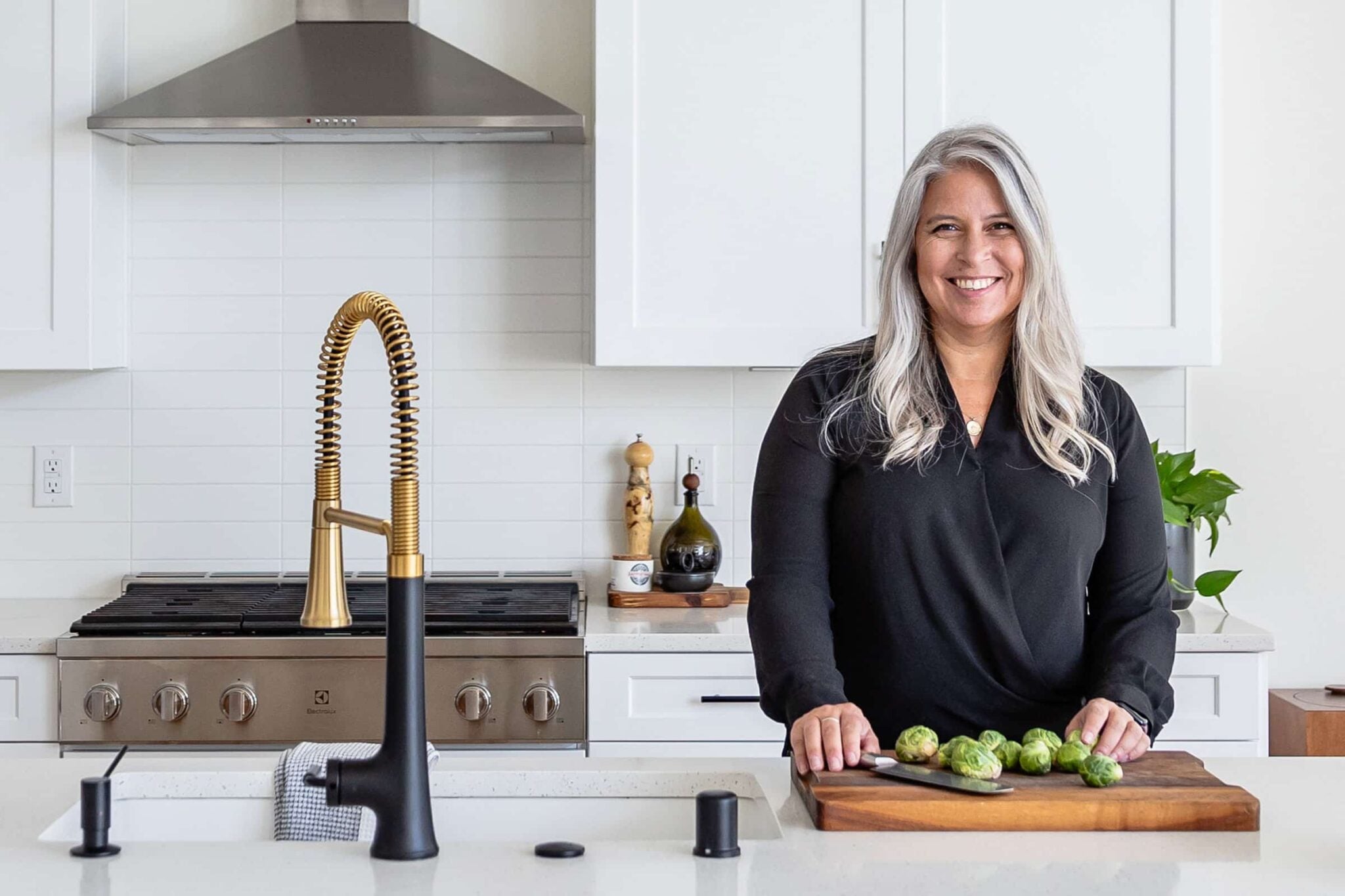
Hi! I’m Heather
I’m Heather, a recipe developer and content creator based in Vancouver, Washington. I started Farmgirl Gourmet in 2006 because I believed weeknight dinners shouldn’t be boring and gourmet shouldn’t mean complicated. I’m also the co-founder of Spiceology, so safe to say I think about food for a living. Stick around for recipes that actually make it into your regular rotation.